
How to pitch SEO services and win the right clients
A founder-to-founder guide on preparing, pitching and securing SEO service business
 Andrew Fennell | Last updated 2 October 2026

+ Free SEO proposal builder
Pitching SEO services is tough.
It’s a big commitment for clients, and they need to feel confident they’re investing in the right partner.
Your job is to build that confidence by showing you understand their business and have a clear plan to help them grow.
I’ve worked in SEO for over 10 years, sending and receiving plenty of proposals along the way. Here’s my guide to pitching SEO services, from preparing for the first call to sending your proposal and following up.
I’ve also built a free SEO proposal template you can send after your pitch.
Before the call
Prepare your pitch

Research the client’s business and customers
Start with the business rather than the SEO tools.
Look through their website and establish:
This sounds obvious, but understanding the business changes how you interpret the search data.
Most clients will also expect you to have at least a basic understanding of what they so
Make a note of anything important that you can’t establish, so you can ask about it on the call.
Review their organic performance and competitors
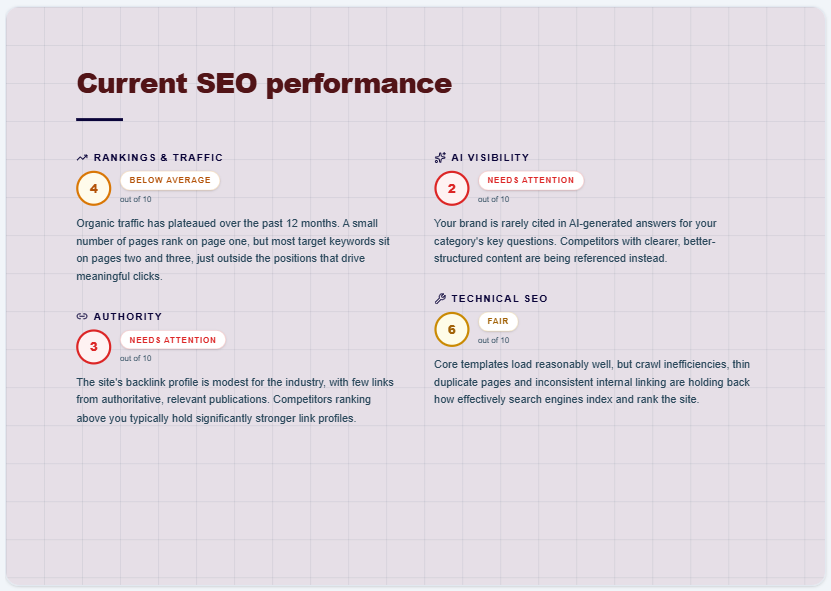
Next, use your SEO tools to get an initial picture of their search visibility.
Look at their ranking keywords, strongest pages, recent trends and the competitors appearing for commercially relevant searches.
Try to answer a few practical questions:
Keep the limitations of your research in mind. Third-party traffic figures are estimates, and you probably won’t have access to their Search Console, analytics or conversion data yet.
You just need to do enough digging to take some valuable insights to the call.
Identify quick wins and bigger opportunities
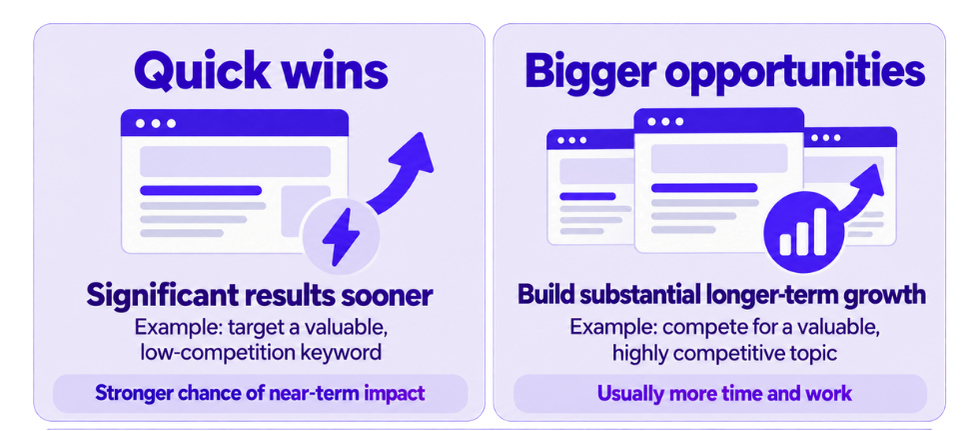
Pick a handful of opportunities that could generate tangible business quickly.
(Quick in SEO terms means weeks instead of months)
A potential quick win might be improving a commercially important page that already ranks on page two or strengthening internal links to a neglected service page.
Many clients expect SEO to take years to deliver worthwhile results. Showing them credible opportunities to start recouping their investment sooner can make your pitch much more compelling.
Just keep your timelines realistic and avoid promising results you can’t guarantee.
Run your client’s website through RevPages with an estimated customer lifetime value (LTV), and it will identify valuable keyword opportunities, prioritise them by revenue potential and ranking achievability, and forecast the additional revenue each could generate from a number-one ranking.
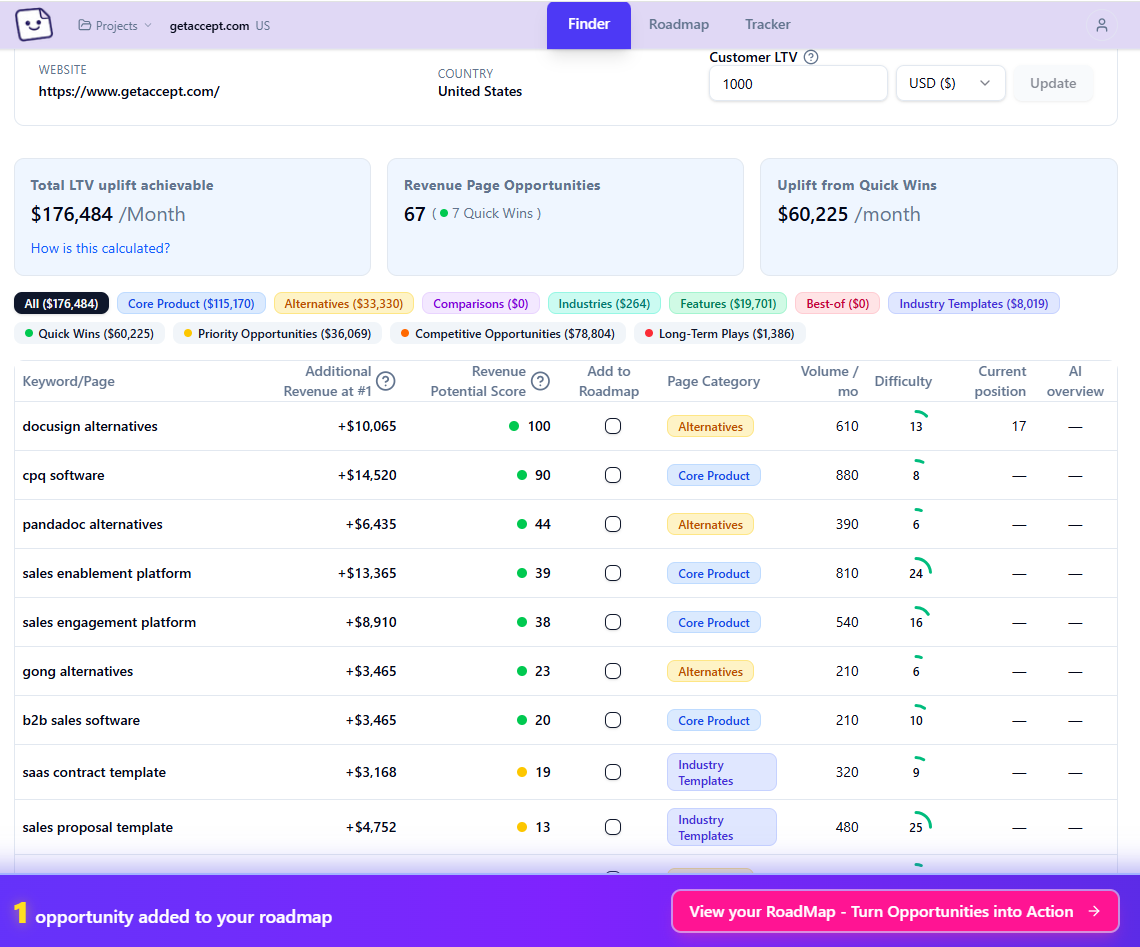
This gives you a data-backed way to explain the potential return on your SEO work, with forecasts you can discuss rather than guarantees.
A bigger opportunity might involve creating a set of industry landing pages, building comparison content or targeting a product category the business has barely covered.
For each opportunity, think about:
- Why it matters to this particular business.
- What work it would involve.
- What evidence supports it.
- What you still need to check.
You want to show that you can prioritise sensibly, rather than arrive with a long list of everything that could possibly be changed.
Develop an initial strategy
Use your findings to form a provisional idea of where you would focus.
For example:
“My initial view is that improving your existing service pages should come first, followed by new pages targeting the industries you serve.”
That gives the conversation some direction, while leaving room for what you learn from the client on the call.
They might tell you that one service has poor margins, a particular product is being discontinued or their development team can’t make website changes for several months.
Those details could completely change your recommendations.
Just prepare enough to demonstrate your thinking.
Save the detailed research and implementation plan for the paid engagement.
Confirm the meeting and set expectations
When a potential client books a meeting, send a short agenda so the client knows what to expect.
This is normally handled by your booking software automatically, but it’s a nice touch to send a personal email in addition, to assure the client that you are actively involved in the process and start building a rapport.
Explain that you’ll discuss their business goals, current SEO activity and a few opportunities you’ve identified. Confirm how long the meeting will take and who will attend.
You can also ask them to think about what they want SEO to achieve before the call.
Send one or two timely reminders with the meeting link – this can of course be automated via your booking software
Keep it light – nobody needs a stream of sales emails before they’ve had their first conversation with you.
During the call
Understand the client and make your case

Your research builds the foundation of your pitch, but the call allows you to delve deeper into the business and develop a full picture of the client’s needs.
Set up your space and equipment
Most clients expect to see your face before committing to several thousand pounds worth of services – so video calls are a must in my opinion.
Use video-call software that doesn’t require anybody signup or login. There’s nothing worse from a client’s perspective than expecting to jump straight on a call – only to find out you have to spend 10 minutes creating an account and restart your computer beforehand.
Also, if you haven’t already – ensure that your background is tidy and looks professional. Clients won’t expect you to have a sprawling office – but a cluttered workspace or blurred background won’t give them confidence in you.

If you use any kind of call-recording or note-taking software – make sure the client doesn’t mind before you start it.
Introduce your agency briefly
Give a short introduction covering who you are, what you specialise in and why your experience is relevant.
If you mainly work with SaaS companies, local businesses or ecommerce brands, say so. If you have a closely relevant example of your work, mention it briefly.
You don’t need to take them through your entire company history.
As somebody who has received SEO pitches, I want enough background to understand who I’m speaking to, then I want to get into the business problem.
You can always explain more about your team and approach when it becomes relevant.
Understand their goals and commercial priorities
Explain that you’ve researched their business and tell them enough about it to show you understand the fundamentals – then ask what they want to achieve and why they’re considering SEO now.
“More traffic” is often the first answer, but you need to understand what that traffic should lead to.
Useful questions include:
- Which products or services do you most want to grow?
- What does a good customer look like?
- Where do most of your enquiries or sales currently come from?
- Is there a particular business target or deadline behind the need for SEO?
You also need to uncover their customer value in relevance to the project – whether it’s average LTV, order value, or the value of a specific product they are focusing on
Understanding the commercial priorities helps you recommend work that matters. It also gives you the language to use throughout your pitch and proposal.
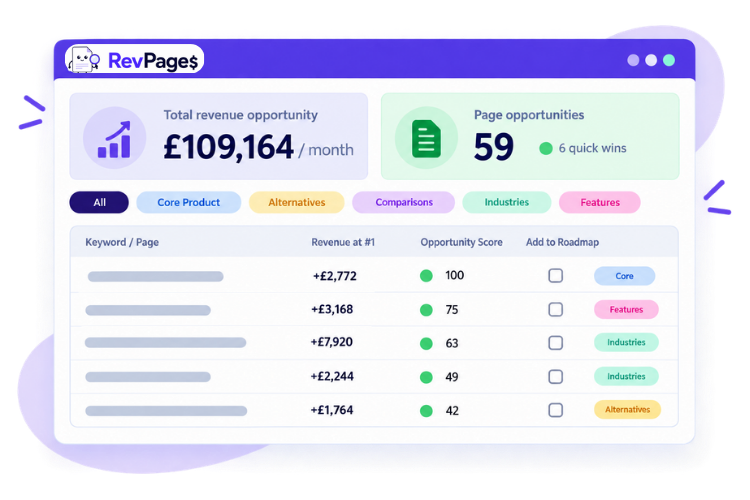
Find your clients’ most valuable keywords in 90 seconds
Revenue forecasted. Instantly prioritised by revenue-potential and ranking achievability.
Explore their previous and current SEO activity
Find out what they’ve already tried.
Ask whether they have an agency, freelancer or internal team working on SEO, what that work involves and how they judge its performance.
If a previous engagement didn’t work out, explore why.
Was there little progress? Poor communication? A strategy that didn’t fit the business? Or were recommendations made but never implemented?
You could inherit exactly the same implementation problem if you don’t understand it upfront.
Avoid criticising the previous provider based on a brief account of what happened.
Ask questions, understand the situation and explain how you would approach the concerns they’ve raised.
Address questions and agree the next step
Before wrapping up, explicitly ask if they have any questions about your recommendations, pricing or how you would work together. Give them time to raise anything they’re unsure about.
If they have concerns, ask a follow-up question to understand what’s behind them before responding. Here are some common objections and how to handle them:
- “SEO takes too long.” Ask whether they have a specific deadline or need immediate sales. Explain the likely timescales and any opportunities that could deliver results sooner. If they need immediate returns, be honest about whether SEO fits that need.
- “It’s too expensive.” Find out whether the issue is affordability or uncertainty about the value. If it’s affordability, discuss a smaller scope focused on their highest priorities. If it’s value, revisit how the proposed work supports their business goals.
- “We tried SEO before and it didn’t work.” Ask what was done, for how long and how success was measured. Explain how your approach would address the problems they experienced, without making assumptions about the previous provider.
- “Can you guarantee results?” Explain that you can commit to agreed deliverables, clear reporting and accountability, but specific rankings or revenue can’t be guaranteed. Use relevant case studies and transparent forecasts to help them assess the potential.
- “We don’t have time to support this.” Clarify what you would need from their team, including access, approvals and implementation. Discuss what you could handle yourself and adjust the plan around their capacity.
- “Another agency is cheaper.” Help them compare the scope, responsibilities and level of support included. Explain your pricing clearly and let them judge whether the additional value matters to them.
You don’t need to push past every objection. Sometimes the conversation reveals that your service isn’t the right fit, and it’s better to establish that before either side commits.
Before ending the call, recap their priorities and confirm what happens next.
For example:
“The main goal is more qualified enquiries for your commercial services, and you’ll need us to handle content creation alongside the technical recommendations. I’ll build the proposal around that and send it over on Thursday.”
Confirm who needs to review it and, ideally, book a follow-up call to talk it through. That gives both sides a clear next step.
After the call
Turn the conversation into a proposal

A detailed, thorough and professional-looking proposal is essential for securing the client’s agreement
And it should carefully reflect the conversation you’ve just had.
When I receive one, I want to recognise my business, my priorities and the problems we discussed.
That shows the provider listened and has put thought into the recommendation.
Organise your notes and confirm the client’s priorities
Write up your notes while the conversation is fresh.
Record the client’s objectives, current challenges, budget, available resources, stakeholders and agreed next steps.
Separate confirmed information from assumptions you still need to check.
If anything significant remains unclear, ask a focused follow-up question.
It’s better to clarify the scope now than send a proposal based on the wrong understanding.
For a more complex project, a short recap email can help confirm that you’re aligned before you prepare the document.
Refine your recommended approach and scope
Use the call to adjust your initial thinking.
Prioritise the work according to the client’s goals, starting position and ability/budget to implement it.
If their development team has limited capacity, that needs to shape the plan. If they want to grow one profitable service, your recommendations should reflect that focus.
Define what you’re proposing to deliver and what sits outside the scope.
Also identify client responsibilities, such as providing subject expertise, approving content, granting access or implementing technical changes.
Clear responsibilities make the proposal easier to assess and reduce confusion later.
You still don’t need to complete a comprehensive strategy for free.
Give them enough detail to understand the approach, investment and expected process.
Create and send a tailored SEO proposal

Your proposal should answer the questions the client needs to make a decision:
- Do you understand what they want?
- What are you recommending?
- Why is that the right approach?
- What will they receive?
- What will it cost?
- What do they need to contribute?
- How will progress be measured?
- How do they move forward?
Include their objectives, current performance, key opportunities, recommended strategy, scope, timeline, reporting, relevant proof and pricing.
Keep the document easy to scan, and ensure it’s clean, professional and in-line with your branding.
All of the content should be specific to the project in hand – avoid filling pages with general information about SEO.
You can use the free RevPages SEO proposal template builder to organise your recommendations and create a polished client-ready PDF
Send the proposal when you said you would.
In the accompanying email, briefly explain your recommendation and confirm the agreed next steps.
Follow up and review the proposal together
Give the client a reasonable opportunity to review the proposal, then follow up according to the timeline you agreed.
A useful follow-up helps move the decision forward:
“Have you had a chance to review the proposed scope? I’d be happy to talk through the priorities and check whether they fit your team’s capacity.”
If possible, review the proposal together. You can explain your reasoning, answer questions and uncover anything preventing a decision.
If they ask for a lower price, discuss whether the scope can be reduced. Be clear about what you could deliver within the revised budget.
If they stop responding, send a polite final check-in and leave the door open. You don’t need to pursue every prospect indefinitely.
Pitch SEO around the client’s business
The strongest SEO pitches make it easy for a client to understand the opportunity, assess the provider and decide what to do next.
From my experience sending and receiving proposals, that comes down to preparation, listening and clear recommendations.
Understand what the client wants to grow. Bring evidence that matters to their business. Explain a realistic approach, with transparent pricing and responsibilities.
Your SEO knowledge gives you the ability to identify the opportunity. Your pitch needs to help the client see its value and feel confident taking the next step.